One of the most common questions I get asked is:
"Jake, what do you think my house is worth?"
I wish it were as simple as plugging an address into Zillow, multiplying the square footage by a number, and calling it a day. Unfortunately, that's not how San Pedro works.
In fact, I recently analyzed two homes that both had 3 bedrooms, 2 bathrooms, roughly 1,800 square feet, similar lot sizes, no view, and were in nearly identical condition. One sold for $830,000 while the other sold for $1,050,000.
That's a $220,000 difference!
How is that possible?
The less expensive home was located in a higher-density pocket with more apartment buildings, smaller homes, and schools that are generally perceived less favorably by buyers. The more expensive home was located higher up on the hill, surrounded primarily by single-family homes, and in a neighborhood that buyers consistently pay a premium to live in. On a map, they were both the same distance from the freeway and the lower priced home was actually closer to the ocean. In person, they stood in two different worlds.
Same city. Similar home. Completely different value.
And that's exactly why so many homeowners struggle to determine what their home is actually worth.
San Pedro is different. And I mean that in the best possible way.
We aren't Irvine with master-planned communities and rows of identical homes. We aren't Manhattan Beach where entire neighborhoods tend to have similar housing stock and pricing patterns.
In Pedro, one street can have unobstructed Catalina Island views while the next street over has none. One block can be lined with beautiful Craftsman homes built over 100 years ago while another is filled with apartments and condos. Some neighborhoods are flat and walkable while others are steep hillsides. Some lots are completely usable while others are technically large but mostly canyon.
Within a couple miles you'll find homes built in the late 1800s, historic Craftsman and Victorian homes, 1950s tract homes, custom hillside properties, ocean-view estates, harbor-view homes, and everything in between. And it’s not neighborhood by neighborhood, oftentimes it is house by house.
As a third-generation San Pedro resident who was born and raised here, I've spent my entire life hearing stories about how different neighborhoods evolved, why certain streets became more desirable than others, and how buyers perceive different pockets of town. My grandfather was a fisherman. My other grandfather worked on the docks. Long before I became a Realtor, I was learning about San Pedro simply by living here.
Since then, I've had the opportunity to help more than 100 local buyers and sellers navigate the market. One thing I've learned is that accurately valuing a home in San Pedro requires much more than plugging an address into an online estimator.
It requires understanding the neighborhoods, the streets, the views, the buyers, and the countless little details that make San Pedro one of the most unique real estate markets in the South Bay.
Why San Pedro is Different
San Pedro is not a city where one formula works for every property.
Within 1 mile, you’ll find:
-
Historic homes districts with homes built in the late 1800’s
-
Craftsman, Spanish, and Victorian homes built between the late 1800’s and early 1900’s
-
Traditional tract homes and Mid-century tract homes built in the 50’s and 60’s
-
Custom homes built between the 80’s to present
-
Flat usable lots
-
Steep non-usable lots
-
Ocean and Catalina Island view homes
-
LA Harbor view homes
-
Homes with no views
-
Homes surrounded by single-family residences
-
Homes surrounded by apartments and multi-family properties
A home in South Shores may have a completely different buyer pool than a home in Palisades and Vista Del Oro, which will have a different buyer pool for homes in Miraleste Pines and San Pedro North, which will have a different buyer pool for homes in Point Fermin, Holy Trinity, Plaza, and Barton Hill. One city, 9 different areas with distinctly different values.
Even within the same neighborhood, values can vary significantly from one street to the next. That is why homeowners are often surprised when they see homes of similar size selling for very different prices.
One City, Nine Different Areas
One of the biggest misconceptions about San Pedro real estate is that it operates as a single market.
It doesn't.
South Shores buyers are often looking for ocean views, larger homes, and a quieter coastal lifestyle.
Vista Del Oro attracts buyers who appreciate character, architecture, and larger lots.
Palisades offers a mix of walkability, coastal influence, and family-friendly neighborhoods.
Point Fermin has everything from small beach-close cottages to incredible harbor-view properties.
Miraleste Pines, Holy Trinity, Barton Hill, Plaza, and San Pedro North all attract different buyers for different reasons.
That's why comparing homes across the entire city can be dangerous.
A buyer shopping in South Shores is often not considering the same homes as a buyer shopping in Barton Hill. Likewise, a buyer looking for a historic Craftsman in Vista Del Oro isn't necessarily cross-shopping a tract home in San Pedro North.
Understanding which neighborhoods compete with one another is one of the most important parts of determining a home's value.
Why Zillow Often Gets it Wrong
Many homeowners start by checking Zillow, Redfin, Realtor.com, Homes.com, and other online home valuation tools. I actually don’t mind if you look at all of the sites - you will see how much they will vary. What I don’t like is when a homeowner hand selects one of the online valuations and is fixed on that being what their home must actually be worth.
While these websites can provide a rough estimate, they frequently miss many of the factors that truly drive value in the San Pedro housing market. Zillow’s Zestimate and the other sites rely heavily on public records, algorithms, square footage, bedroom counts, bathroom counts, and recent sales.
The challenge is that San Pedro is not an algorithm-friendly city.
For example:
-
Zillow doesn't understand that homes on one side of the street may have unobstructed Catalina Island views while the homes across the street don’t even have peak-a-boo ocean views.
-
Zillow doesn't know if your lot is large and usable or steep and difficult to enjoy.
-
Zillow doesn't understand which streets have primarily single-family homes versus streets with heavy apartment density.
-
Zillow doesn't know if your remodel was completed with gold countertops or the cheapest finishes available.
-
Zillow doesn't understand neighborhood nuances, traffic patterns, street noise, walkability, parking challenges, or buyer perception.
There is also another reality that longtime Pedro residents understand well: Many homes have been improved over the years without permits. Whether it was a kitchen remodel, bathroom remodel, room addition, patio enclosure, or other upgrades; online estimators will not accurately reflect those improvements.
Usually Zillow and Redfin inflate their estimates, causing homeowners to push back on price when I try to bring them to reality. However, the same sites can work against a homeowner and diminish the perceived value of their home.
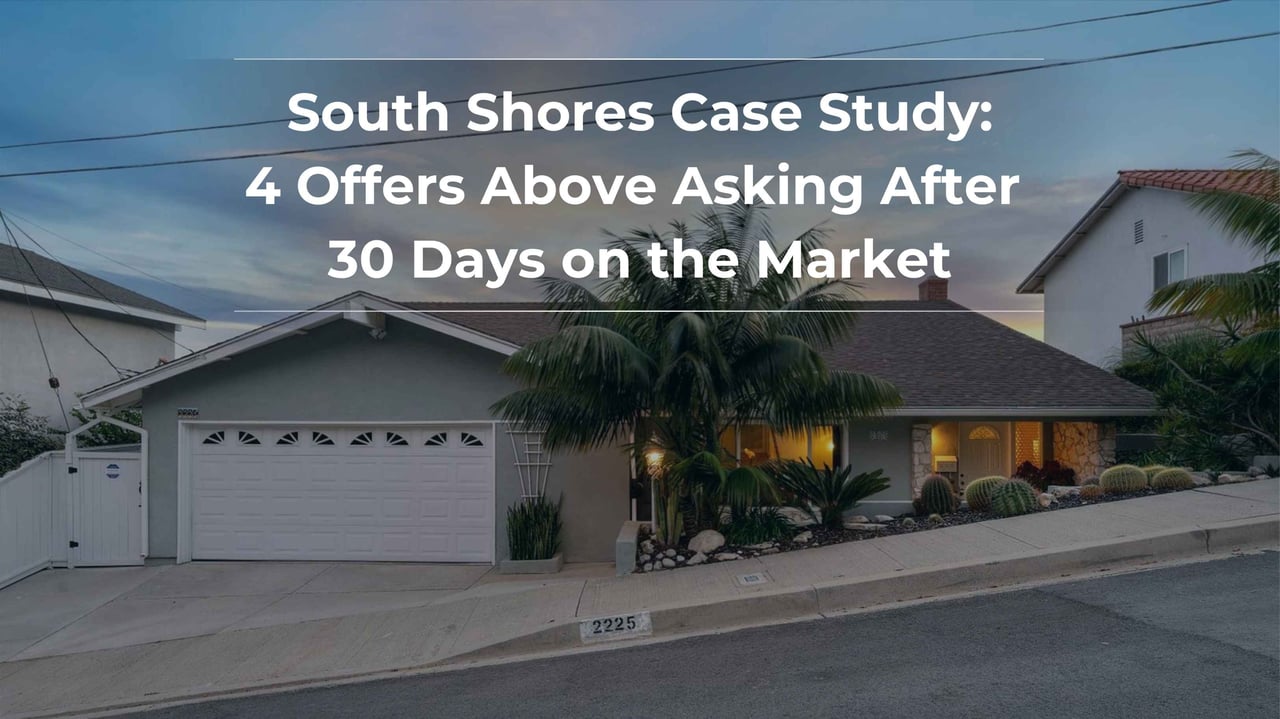
I recently sold 2225 Grenadier Drive in the South Shores area of San Pedro. It had a near identical comp that sold 3 months before we listed. They both had the same exact tri-level floorplan with the same exact square-footage and a similar lot size. The comp was 2223 McRae Drive, which sold for $1,320,000 - the algorithms had Grenadier near that range. What the algorithms didn’t know is that McRae is backed up to 25th St which is a busy street and noisy. McRae is also lower on the hill with apartments blocking the majority of the view, and the majority of the sloped lot was not usable, resulting in a small yard. Grenadier on the other hand is located 3 blocks higher with 100% unobstructed views, no street noise, a fully usable lot, and pool. The algorithms accounted for the pool but that was it - they did not account for the view, street noise, apartments, usable lot, or condition of the interior. Thank goodness the sellers didn’t sell to Zillow’s partners at OpenDoor, because we ended up selling for $1,663,000! A pool (especially without a jacuzzi) is not worth $343,000 - but a pool, larger view, usable yard, and less street noise is!
This is why you hire me to investigate, research, and use my local knowledge to provide you a range of value. Whether it is a frustrating reality check or an exciting shock, I am here to offer you an honest and reliable opinion of value.
Why I Rarely Use Price Per Square Foot
One of the biggest mistakes I see homeowners make when trying to determine their home's value is focusing too heavily on price per square foot (price/SF).
Don't get me wrong, price/SF can be a useful tool in certain situations. When looking at homes in the same development with similar floor-plans, lot sizes, views, condition, etc., it can help provide a rough benchmark.
For example, in communities like Ponte Vista, Harbor Walk, and The Gardens where the same models have sold multiple times within the last 6 months - absolutely, price/SF is a great method to reference. Even neighborhoods with tracts that have many of the same floor-plans and lot sizes like the Taper neighborhood, price/SF can be a helpful reference point.
The problem is that the majority of San Pedro does not work that way.
A south-facing 1,500 SF home in upper South Shores should not be valued the same as a 1,500 SF home in Vista Del Oro. They might only be 0.25 miles away from each other, but the South Shores home will most likely have unobstructed Catalina Island views while the Vista Del Oro home most likely doesn't have a view at all. The price difference will result in a drastically different price/SF.
Likewise, a rare and uniquely remodeled Spanish style home in Vista Del Oro shouldn’t automatically be compared to a tract home in a different part of town. Often sellers refer to Zillow or Redfin and look at the average price/SF throughout the entire city and use that as a reference. Pricing requires more precision than that.
Price/SF ignores factors like:
-
Ocean, island, harbor, and city views
-
Lot size and lot usability
-
Location within a neighborhood
-
Cul-de-sac versus through street
-
Proximity to apartments or commercial properties
-
Next door neighbors influence
-
Architectural style and character
-
Remodel quality and finishes (custom cabinets versus pre-fab)
-
Layout and functionality
-
Deferred maintenance
-
Overall buyer demand for a specific area and property type
As we saw between Grenandier and McRae, I've seen two homes with exact identical square footage sell hundreds of thousands of dollars apart because buyers weren't purchasing square footage, they were purchasing a location, view, lifestyle, and street. If the same floor-plan can have a $343,000 price difference with only being 3 blocks apart, just imagine how much more it can change by neighborhood!
That's why I don't start with price/SF when valuing a home. Sometimes price/SF supports the value we see. Other times it can be completely misleading. In my experience, price per square foot is often the result of a home's value, not the reason for it.
When I determine the value range of a home, I start with the property itself - condition, layout, quality of work, functionality, features, cookie cutter versus uniqueness, etc. Then I compare it to the most relevant recent sales, most of which I have physically toured in person, allowing me to understand the similarities and differences in ways that photos on a computer cannot justify and an algorithm cannot comprehend. This allows me to determine a justifiable price range that comps support and buyers are actually willing to pay.
For this reason, next time you are trying to figure out what your home is worth and you catch yourself resorting to the average price/SF, just call me!
What Actually Determines a Homes Value
When I evaluate a property, I focus on much more than square footage.
Location
Location is huge and probably the most important factor. A home can have all the bells and whistles, but if it is in the least desirable part of town, it’ll sell for less than a fixer upper in the most desirable part of town.
I look at location on the macro level: area, neighborhood, reputation, schools, walkability, etc.
Then I look at location on the micro level: quiet cul-da-sac versus busy through-street, surrounded by apartments or surrounded by single-family homes, south/north/east/west facing (it matters for sun exposure and view depending what part of town the home is located in).
Views
View premiums are real here in San Pedro. Some buyers are willing to pay substantial premiums for views they get to enjoy every day. I've seen view differences create value swings well over six figures.
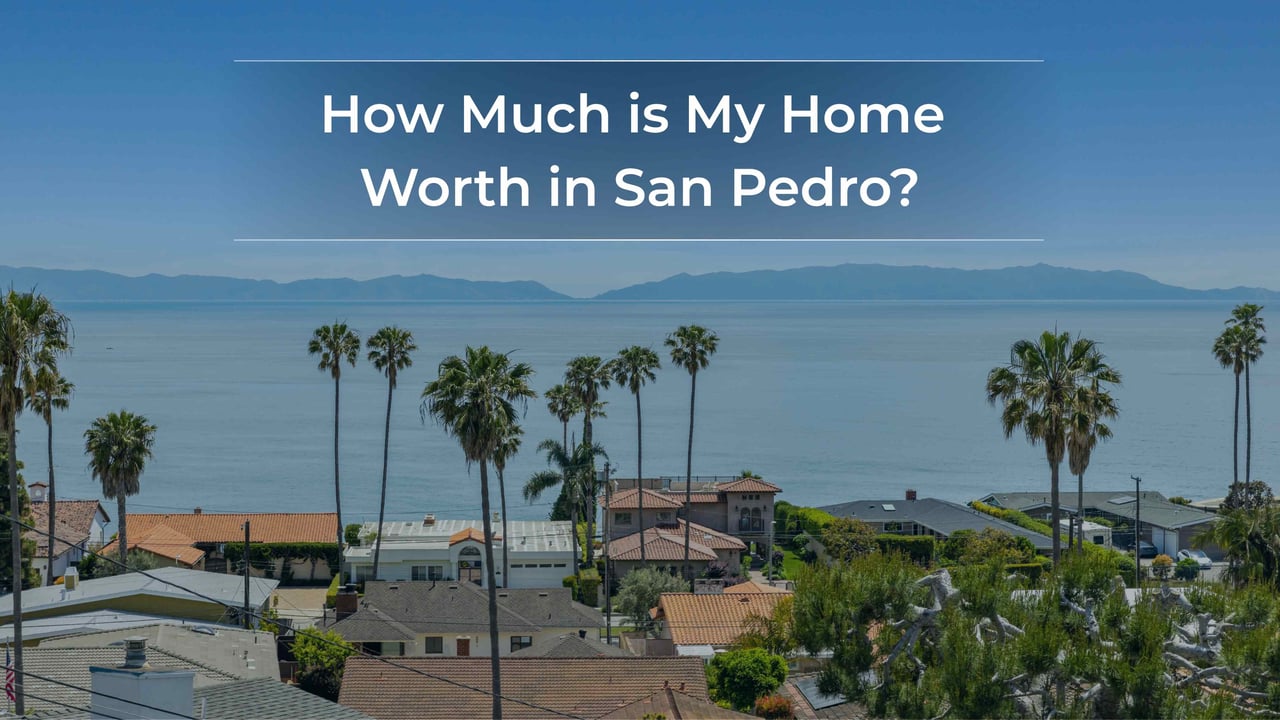
San Pedro views vary and oftentimes buyers demand a specific view. There are high panoramic views of the ocean and multiple Channel Island, up close ocean and Catalina Island views where you can see the waves crystaling, coastline bluff views, harbor views, and city light views.
Lot Usability
Two lots can have identical square footage, but drastically different values. One can be flat and usable where the other can be a steep hillside that cannot be fully utilized.
Lot sizes in San Pedro average around 5,800 SF to 6,000 SF, with some as low as 1,200 SF and others up to 40,000 SF. Most of the large lots are unusable canyon lots.
In a city where large flat usable lots are relatively rare, this can have a major impact on value.
Layout
Buyers don’t live in square footage, they live in floorplans.
A well-designed 1,600 SF home can feel significantly larger and more functional than a poorly designed 2,000 SF home.
San Pedro has cookie-cutter tracts (Taper area, parts of Palisades, and Miralest Pines), “tall and skinnies” (Point Fermin), hillside homes (South Shores, Palisades, and Point Fermin), and much more variety. Some allow for great floorplans and/or future potential, while others can feel crammed with limited use.
Flow, functionality, bedroom placement, kitchen size, natural light - it all matters.
Condition and Remodel Quality
This too is huge and often a challenge for homeowners to accept.
Condition matters more today than it did during the Covid-era frenzy. With higher interest rates and higher home prices, buyers have become very selective. Turnkey homes are attracting strong demand because many buyers don't have the extra cash needed for major renovations after closing.
However, there is a sweet spot on how turnkey the home should be. Ultra high-end finishes don't always generate a matching return in San Pedro compared to markets like Manhattan Beach.
San Pedro has a sophisticated buyer pool, so cheap finishes will be noticed and won’t work. But this isn’t the ultra high-end market of the South Bay either. The best returns typically come from quality improvements that appeal to today's buyers without over-improving for the area.
PS: DIY projects can be your worst enemy. I get it, you went through so much sweat, time, money, and beers (maybe one too many) to complete the project. You are proud of the work you did, as you should be! You bonded with your partner and made memories - good for you! But that is where the emotion overrides rationality. I see crooked cabinets, uneven backsplash, patchy paint; but you see a masterpiece. Buyers will notice, and it will affect the value of your home.
Don’t worry, I will kindly inform you of perceived buyer value of completed work throughout the home, whether it is professionally done or a prideful DIY job.
How I Determine Value
It starts with a personal tour of the home. I don’t like quote value over the phone and computer because there is no way to be confidently accurate that way. I want to understand:
-
Condition
-
Layout
-
Functionality
-
Lot Usability
-
Views
-
Upgrades/Quality
-
Deferred Maintenance
-
Overall Buyer Appeal
From there, I head back to the computer and deeply analyze recent comparable sales. Odds are, I have toured the comps in person with a great understanding of the homes to fairly compare.
I prefer to focus on sales within the last 6 months since that more closely represents the current economy, real estate market, inventory levels, interest rates, and buyer behavior.
I also try to focus on sales within a half-mile radius (since that is where appraisers focus their analysis) along within the same MLS area even if that lands outside a half-mile (South Shores, Vista Del Oro, Point Fermin, etc). This represents what buyers are paying in a specific area/neighborhood.
Pedro, however, isn’t always that simple. Sometimes a property is unique, has a rare view, uncommon lot size, a distinct architectural style, or other characteristics that aren’t common in the immediate neighborhood. The best comparable sales may land outside a half-mile radius and the MLS area. In that situation, I will pull the most similar properties and add/subtract value based on the area. The goal isn’t to find the closest sale; it is to find the most similar sale.
This is where local knowledge becomes important.
As a third-generation San Pedro resident who has sold more than 100 homes in town, I know which neighborhoods compete with each other, which streets command premiums, which locations buyers avoid, and how different pockets of San Pedro are perceived in the marketplace.
Because no two homes are exactly the same, I don't believe pricing is a one-size-fits-all exercise.
I provide my sellers with a realistic value range and then work together to determine the best pricing strategy based on their goals. Some sellers want maximum exposure and a quicker sale. Others are comfortable testing the upper end of the market. My job is to provide the data, explain the opportunities and risks, then help create a pricing strategy that makes sense for their specific situation.
Why Pricing Correctly Matters
Pricing too high or too low can hurt your bottom line; badly.
Pricing too high can be expensive.
When a home sits on the market for an extended period of time, buyers begin to worry what’s wrong.
A price reduction takes place, momentum disappears, and more price reductions follow. Buyers seem to make moves on excitement or discounts. Even when you conduct a price reduction, potential buyers see the listing as old news, it’s no longer exciting. And since the list price was high, a price reduction still keeps the listing above market or at market, not a discount. As days on markets accumulate and multiple red arrows point downward, buyers either assume something is wrong or see it as an opportunity to get in at an even bigger discount.
Separately as the owner, your holding costs of mortgage, property taxes, and insurance add up. It is also worth noting the inconvenience and stress of cleaning the house for last minute showing requests and open houses, people stopping in front of the house to check it out while you are working on the yard, neighbors asking questions, etc. It tests your sanity.
Pricing too low isn’t always the answer either (especially in today’s market).
During the Covid market, underpricing often created these massive bidding wars where the sky was the limit. But that is when the market was priced for rates to be at 5%, but rates were actually 2-3%. So prices were at a major discount when you calculated the monthly payment. Buyers would look at their low monthly payment and say, “Offer $150k more.” It was crazy!
Today’s market is different. Buyers are more cautious, and understandably so. Home prices rose through Covid and they really haven’t fallen, and rates have more than doubled (6.61% today). Affordability is much more challenging today.
In fact, from 2019 to 2026, the median income in LA rose by around 23%. However, the median priced home in San Pedro rose 51% and the required income to afford the higher interest rate rose by 94%. Isn’t that crazy?! It’s actually sad when you think about it - so many income levels that used to be able to afford a home simply can’t anymore. I think I am going to write a separate blog about the details of these stats…
ANYWAYS.
My point is that while multiple offers still happen on special properties, buyers generally don’t bid up a home the way they did several years ago. In fact, the lack of affordability explains why many underpriced listings don’t get bid up at all.
For example, if a property does not have special features (great view, rare usable lot, fully remodeled), pricing low with the hopes of a bidding war is a terrible idea. You may receive multiple offers, but the bids will stick closer to the list price. Instead of the buyer saying “Offer $150k more”, they might say, “Offer $10k more.” In this scenario, a seller can leave a lot of money on the table by listing too low.
The Goal
The goal is to not price too high and not price too low. In today’s market, you need to price strategically.
You need someone in your corner that knows the local market, understands buyer psychology, current trends, macro and micro economics, and where pricing should be.
I offer my sellers a sellable range and collaborate with them on which route they want to take. We can price on the low end of that range if you can’t sleep without trying the multiple offer route, we can price on the high side of the range if you can’t sleep without testing the market, or we can price in the middle where the market mostly supports.
Looking Ahead
San Pedro continues to evolve.
Projects such as the West Harbor waterfront redevelopment continue to generate excitement about the future of our community. New development, infrastructure improvements, and continued buyer interest in coastal communities all contribute to the city's long-term appeal.
That said, every property is different, and every homeowner's situation is unique.
It takes someone with in-depth knowledge and boots on the ground experience to be able to analyze all of these factors properly and decipher where a home should be positioned in the marketplace to maximize a homeowner's proceeds.
Whether you own a home in South Shores, Palisades, Point Fermin, Vista Del Oro, Miraleste Pines, Holy Trinity, Plaza, Barton Hill, or San Pedro North, every property deserves an individualized valuation based on its location, condition, features, and current market demand.
If you're wondering how much your San Pedro home is worth, I'd be happy to provide a personalized analysis based on your home's location, condition, upgrades, lot characteristics, and current market conditions.
No algorithms. No guesswork. Just a local perspective built on a lifetime in San Pedro and years of helping buyers and sellers throughout our community.
If you'd like a custom home valuation, feel free to reach out. I'd be happy to help.